Caproni Academy
Gianni Caproni Aeronautics Museum
Museum visitors and school groups
Project TypeVirtual Reality
ScopeEducation
A narrative VR experience of calibrated flight simulation that turns the Caproni Museum's historic collection into an immersive journey guided by Gianni Caproni himself.
To make a collection of historic aircraft and designs — which, along the physical museum route, risks staying static — vivid and memorable for a diverse audience.
An immersive narrative mission, calibrated to each individual's tolerance, that showcases Caproni's designs and drives visitors back toward the museum's physical collection.
The project
Caproni Academy was created to permanently enrich the visitor experience at the Gianni Caproni Aeronautics Museum, transforming the heritage of the Fondazione Museo storico del Trentino into a first-person story. The thread running through it is the figure of Gianni Caproni — Trentino's flight pioneer — who guides the user as narrator and protagonist: from the history of transport (the sea, the train, the automobile) to the dream of the sky. A flight simulation in search of Caproni's designs, whose historical accuracy is guaranteed by the museum's curatorial oversight: every aircraft and every insight is anchored to real sources. The result is a tool that doesn't explain history — it makes you traverse it.
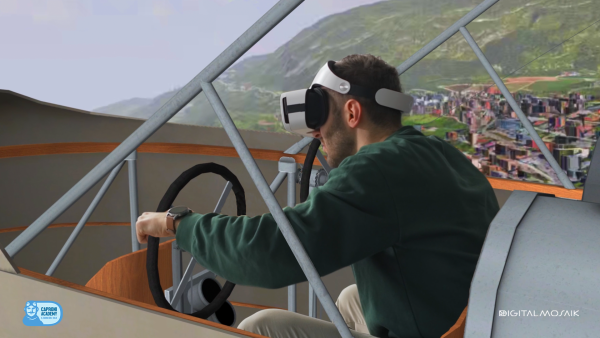
Inside the experience
The experience opens in a monochrome environment where the user gets comfortable with the interaction and chooses the language (ITA/ENG/DE). The journey unfolds in sequential phases:
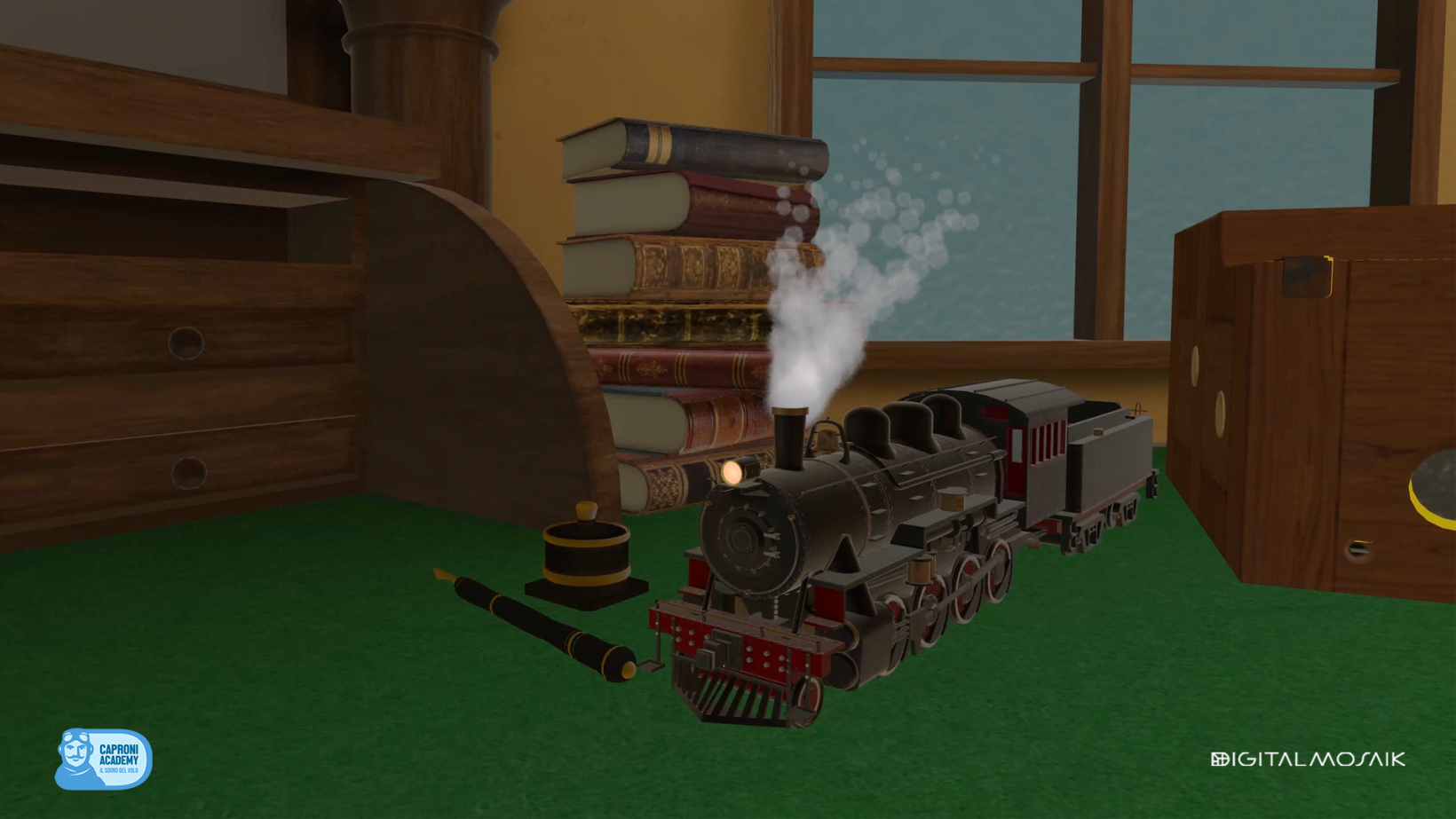
- Historical introduction: Caproni's "ghost" leads the user through the evolution of transport up to the dream of flight, finally revealing his own identity. The action is triggered when the user, against an explicit warning, touches a lever: the pioneer's designs are swept away in a whirlwind. From here the mission — "find the designs and piece the dream back together."
- Gradual approach to flight: before the mission, short practice sessions with immediate feedback familiarize the user with the controls and gauge their comfort.
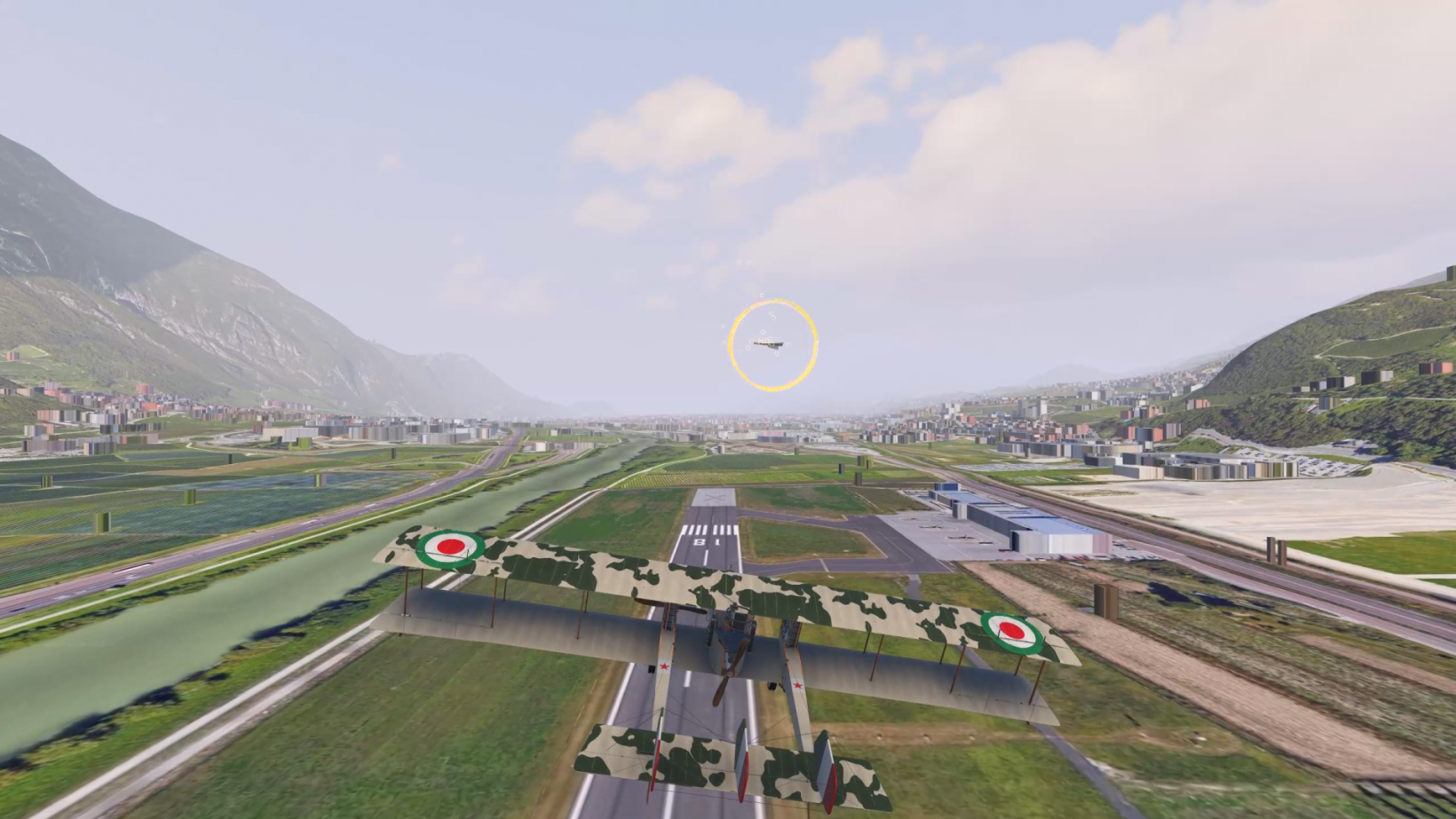
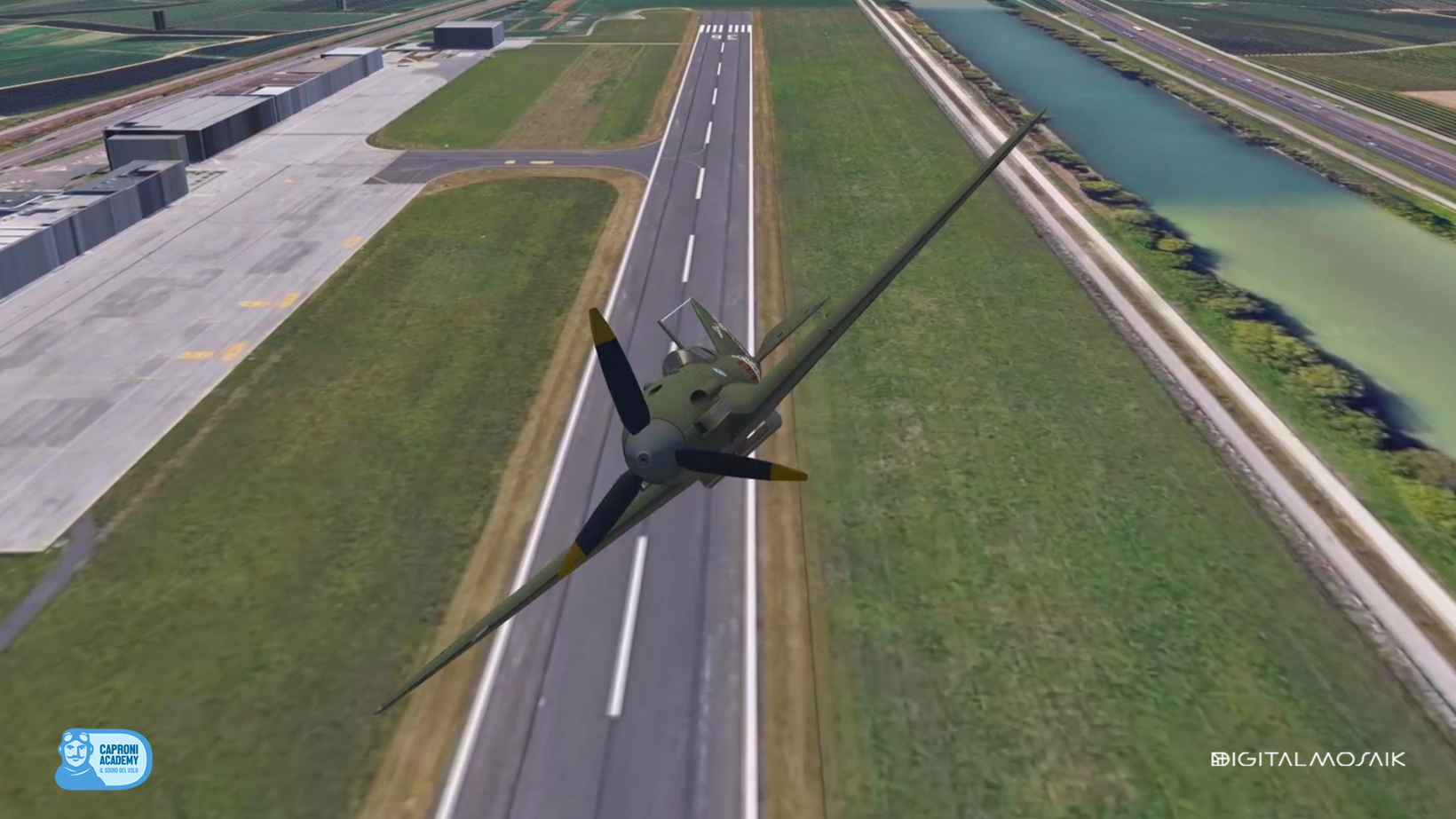
- Choosing mode and aircraft: the user selects one of three flight levels and one of three pilotable aircraft — the Ca.3, Ca.100 and Reggiane — with the more demanding options unlocked according to the comfort shown. Brief cards place each model in its era.
- Flight simulation: flying over the mountain landscape and the city of Trento, the user retrieves paper planes by following colored rings suspended in the sky.
- Finale and deep dives: Five optional historical focuses allow further exploration. The experience closes by inviting the user to take off the headset and seek out, in the physical museum, the aircraft and designs they recovered.
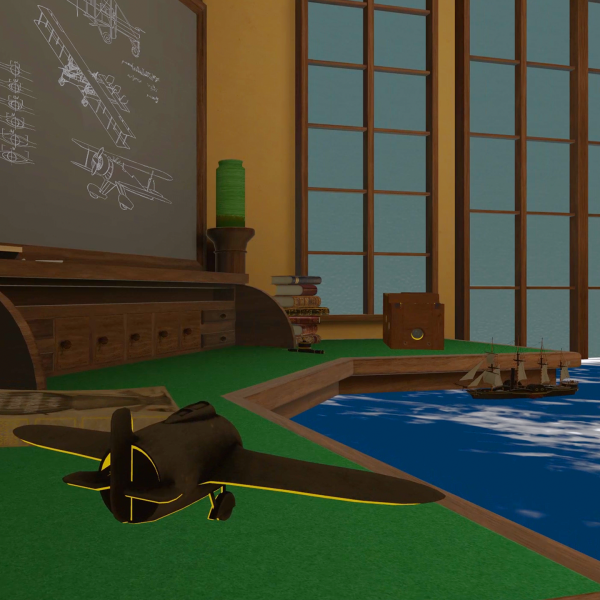
About the design
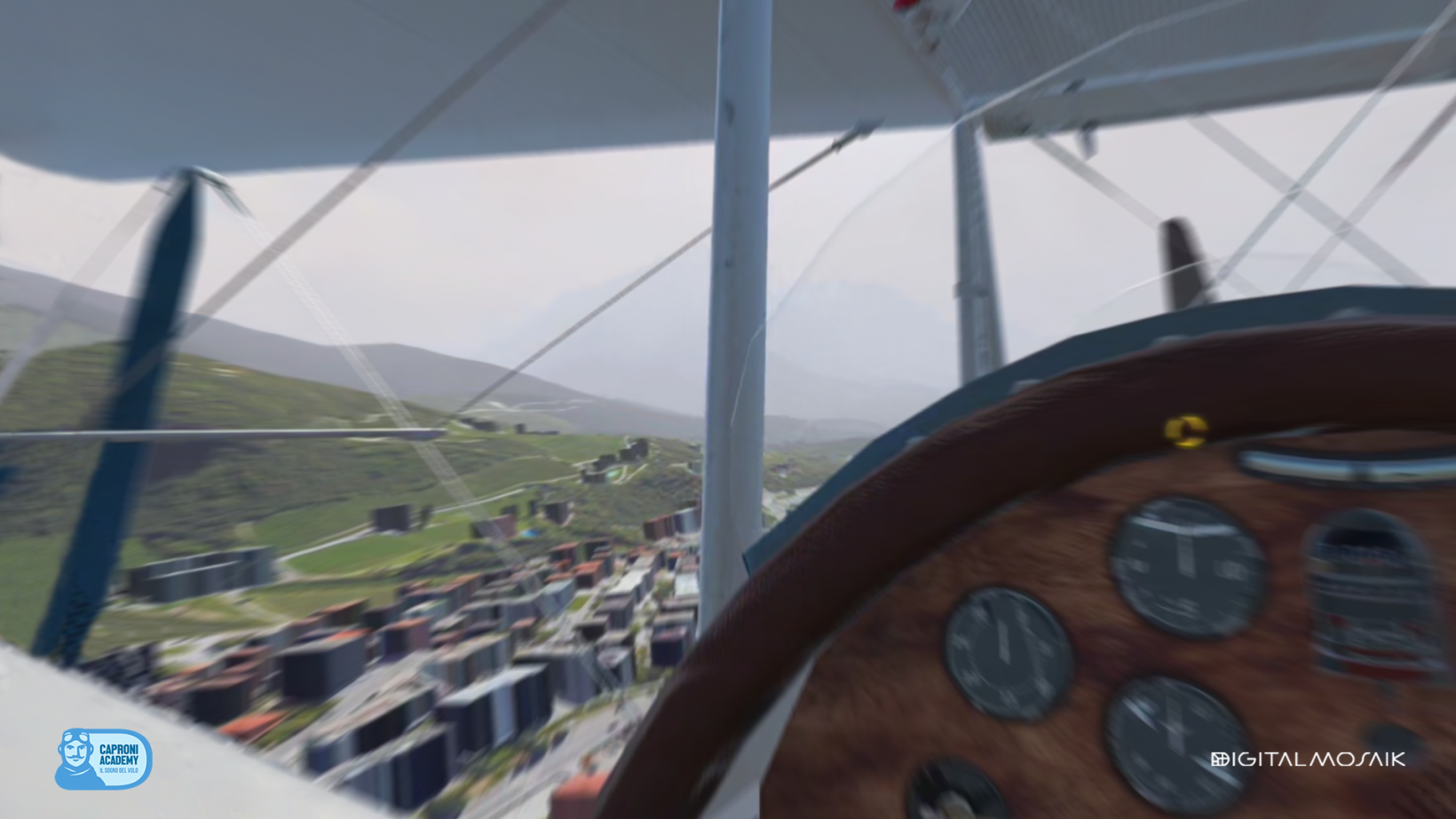
The design rests on a principle of accessibility: flight VR, normally exclusionary for those prone to motion sickness, is made accessible to an audience ranging from age 9 to the elderly thanks to the gradual approach and the choice among three modes, which adapt the experience to the person rather than imposing a single one. Short sessions and instant feedback let users calibrate their own level without frustration or nausea. The interface is "silent but present": 2D graphic panels and audio feedback guide without breaking immersion, while diegetic signals (the red gloves on error, the alignment symbol on the yoke, the emergency button) communicate status without intrusive text. Caproni's voice acts as the fil rouge holding tutorial, narration and history together, so that even technical instructions stay within the fiction. The three pilotable aircraft — Ca.3, Ca.100 and Reggiane — and the various levels, in first and third person, ensure replayability, while the museum-supervised historical accuracy makes every detail an authentic fragment of the Caproni heritage. The real design achievement: digital flight doesn't replace the visit — it sparks it.