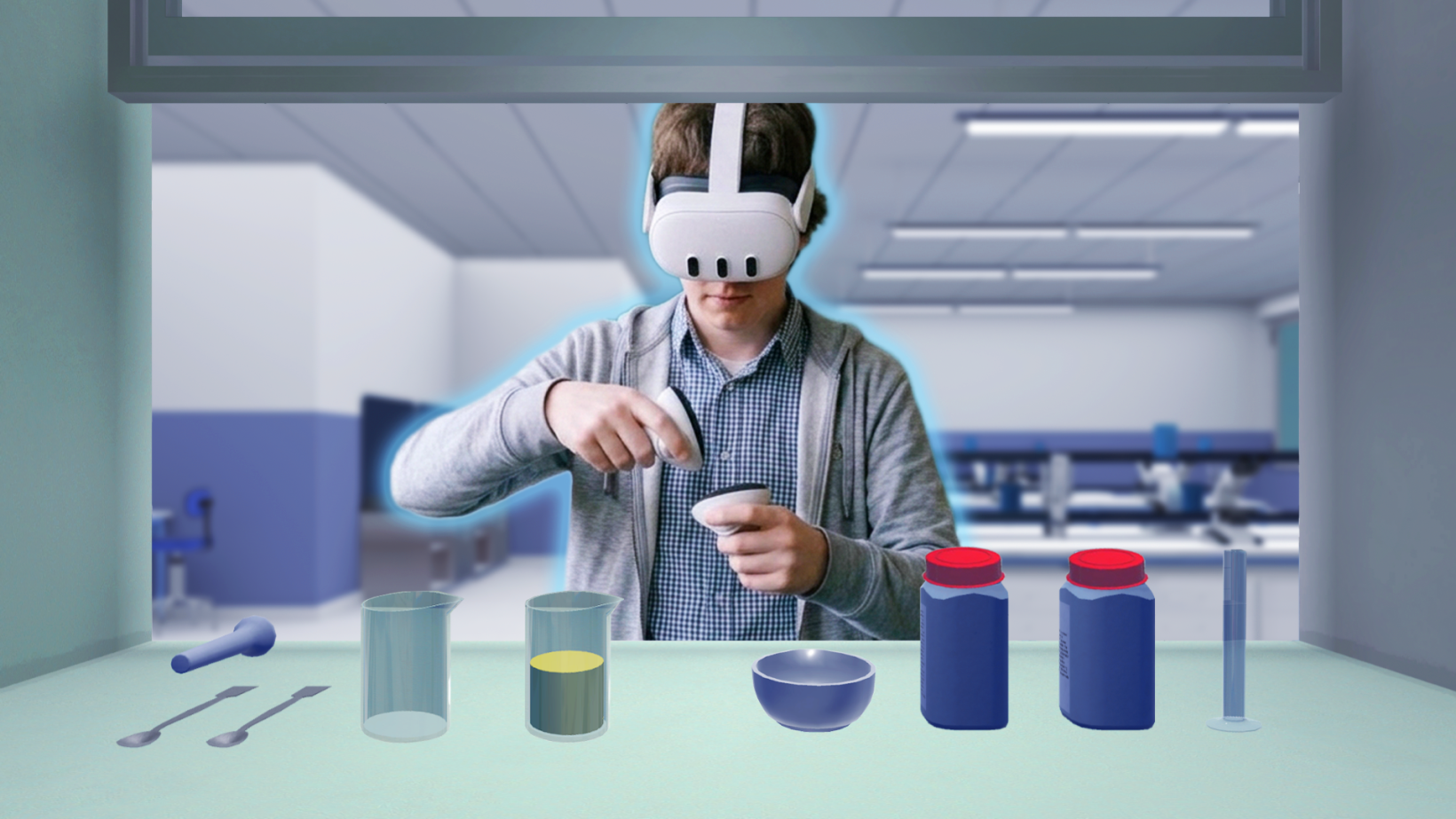
Chemistry VR Lab
ITT “M. Buonarroti” in Trento
Students, Teachers
Project TypeVirtual Reality (VR)
ScopeEducation & Training
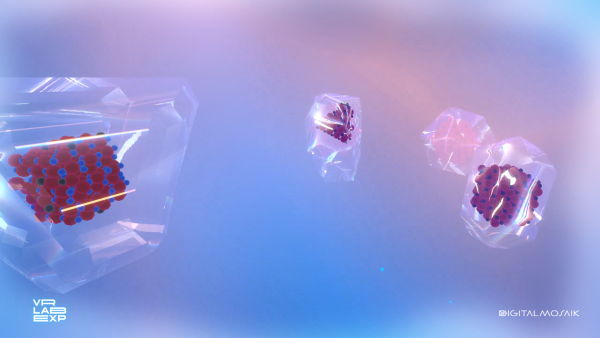
An advanced VR simulator dedicated to chemistry, born from a unique model of collaboration between a company and a school, that allows students to perform complex experiments in complete safety and visualize molecular reactions that would otherwise be invisible.
To overcome the physical limitations of the traditional laboratory: eliminate risks associated with the toxicity of reagents, reduce material costs, and make the theoretical concepts of microscopic chemistry tangible.
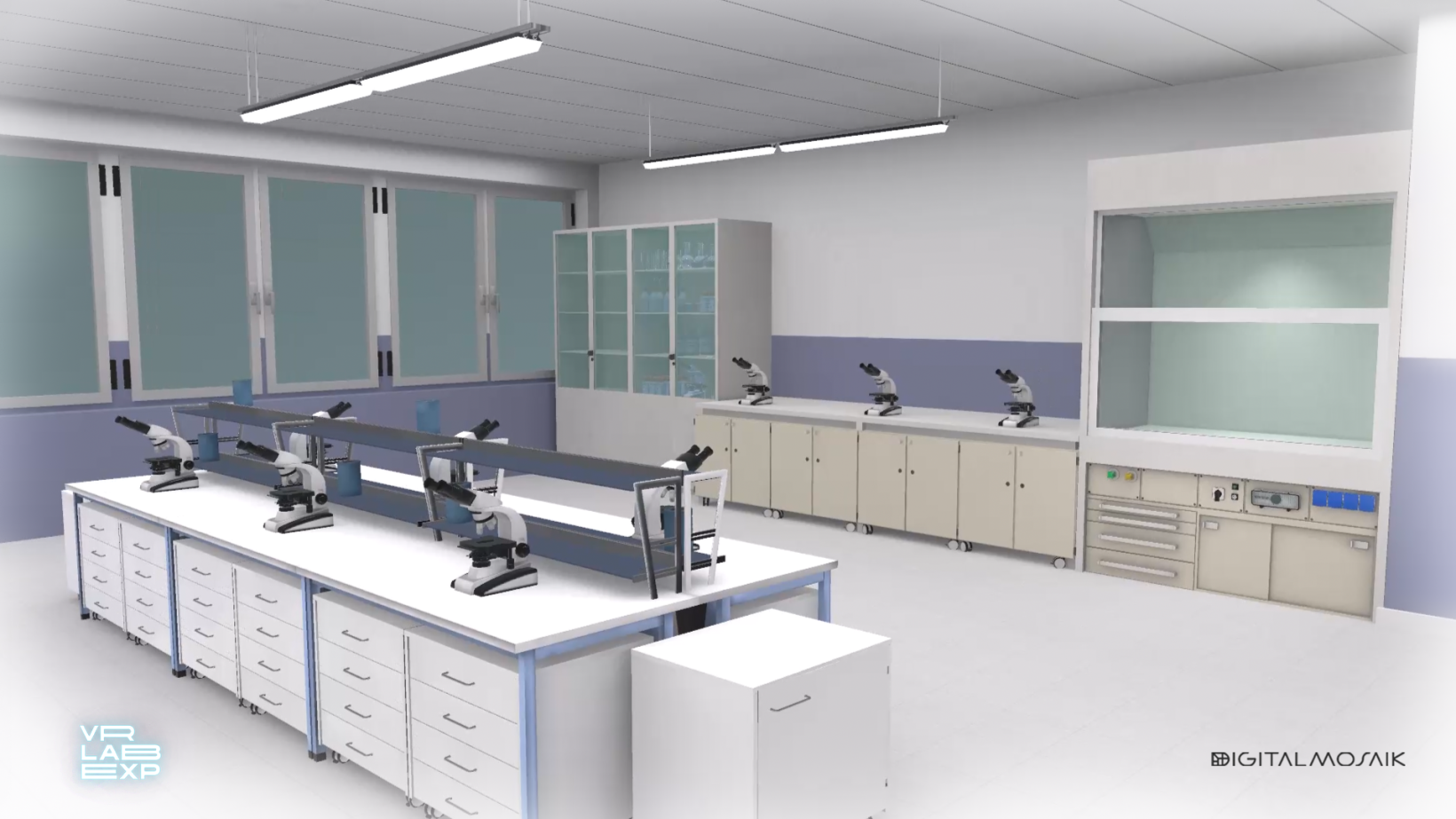
A “Zero-Risk” immersive experience divided into Training and Test modes, capable of guiding students through a rigorous scientific procedure, monitoring every action, and providing immediate feedback.
The project
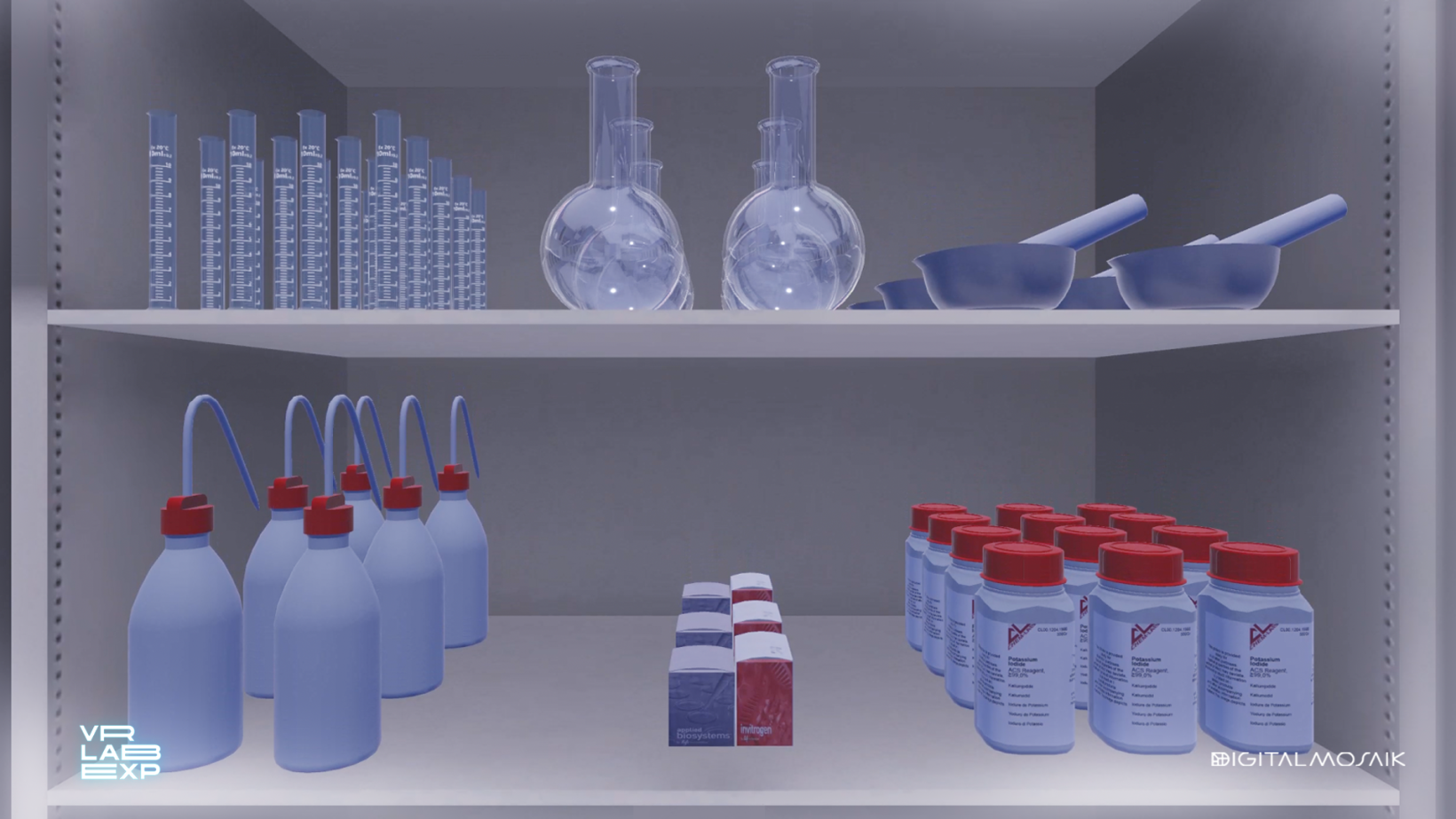
Chemistry VR Lab was created to advance teaching at the Buonarroti Institute, overcoming the limitations associated with handling toxic substances and making otherwise abstract chemical processes visible. The project represents an advanced model of co-design: the involvement of a class and the inclusion of three students in the development team made it possible to define mechanics and interfaces based on the actual needs of the end user. Through continuous cycles of testing and feedback, the students themselves optimized the technical precision and usability of the experience. The result is a cutting-edge educational tool, built with and for students, capable of transforming theory into practical skills in complete safety.
Inside the experience
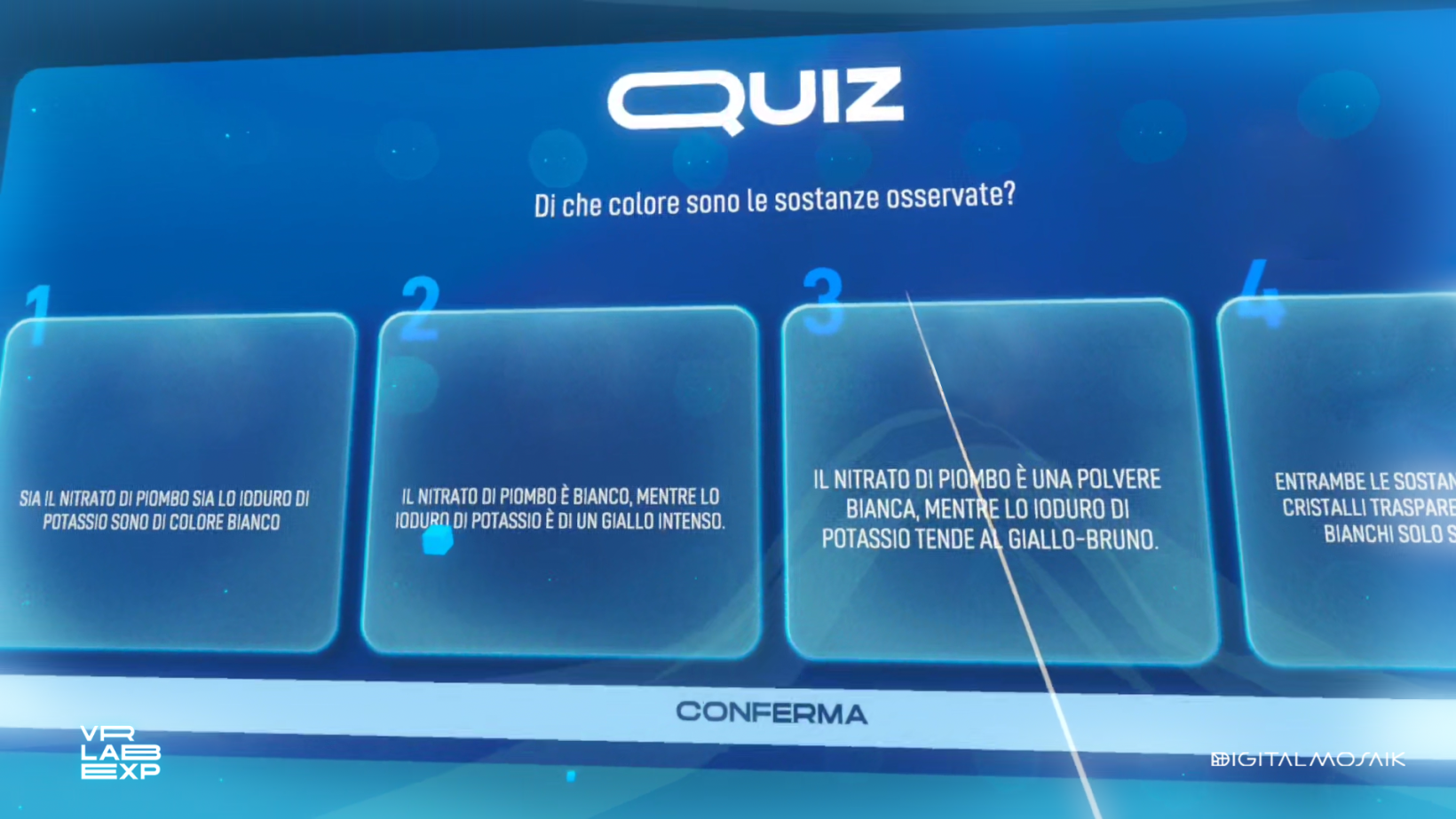
The user begins the “Lead Nitrate and Potassium Iodide” experiment by choosing between two modes: Training, for guided learning, or Test, to validate the skills acquired. The experience adapts to the student’s level of preparation through Basic or Advanced difficulty levels, following a rigorous scientific protocol divided into sequential steps:
Safety & Setup: The experience begins in the changing room. Properly wearing PPE (lab coat, gloves, and goggles) is a fundamental and mandatory prerequisite: without the correct attire, the system will not grant access to the laboratory or the fume hood.
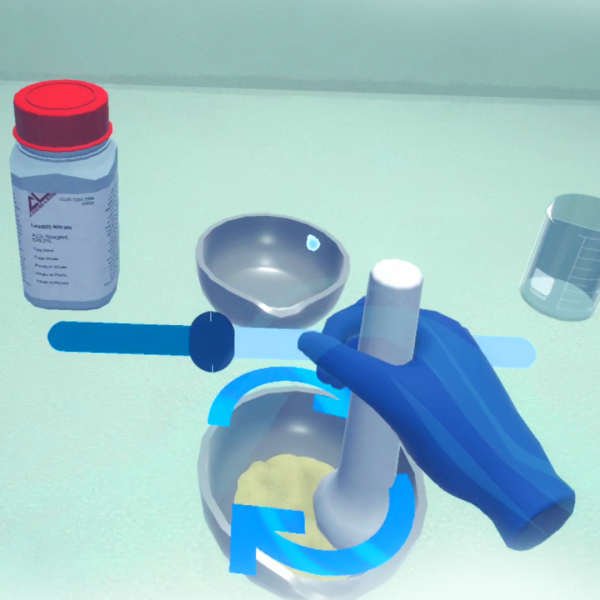
Reagent Preparation: Under the fume hood, the student handles beakers and graduated cylinders to measure out
About the design
The user interface (UI) design was conceived to be “subtle” yet ever-present: graphical panels guide the user without breaking immersion, while the sound design provides tactile feedback for actions (the sound of glass, the hood turning on). Scientific accuracy was ensured through faculty supervision, guaranteeing that every molecular animation reflects chemical reality. The result is a “Learn by Doing” tool that transforms mistakes into safe learning opportunities—something impossible to replicate in the physical world.